Half-developed musings of a half-wit who reasons that if you have half-a-mind-2, then we are a head.
13 August 2020
Do prayers get results ?
23 July 2020
History - true or false or irrelevant ?
A brand new school opens freshly painted doors to welcome its first students to their first classes.
An enthusiastic history teacher, Anna Chronism, arrives to face her first students in her first class ever.
She considers that she is not simply teaching history, but helping to make history.
She arrives to find three young women sitting in a row, all have their heads bowed down, each is reading a book.
She is surprised to observe that the covers of the three books are exactly the same.
"Morning everyone," says the teacher. "Enjoying your book?"
"Yes Ma'am" the three say in unison as they look up.
She gasps. The three girls are dressed quite differently and yet appear to be physically identical. One has baggy cargo shorts, loose top and tattoos on her arm, another has a pleated skirt, a fitted black T-shirt, loose blouse over it, and prominent crucifix showing at her neck, and the third is dressed in long pants and a jacket with a belt at the waist. Despite the variation in what they are wearing, the three girls appear to be physically identical: same eyes, same nose, same hair, same height, same build.
As she seeks to calm herself, Anna asks the three girls what book they are reading.
The girl with the tattoos responds: "I dunno!"
Anna asks her for her name. She responds: "People call me Mysteryy. That’s with an extra ‘y’ at the end."
Nodding, Anna asks, "So Mysteryy, aren't you interested in the book, its name, its author?"
"Yes, yes, I am interested in the book, it is a great book, I'm really enjoying it. But I judge a book by the contents, not by the cover, not by the title, not by the author."
The wearer of the crucifix raises her hand offering her explanation, "Excuse me Miss, it is a book called Silas Marner by George Eliot."
And what's your name" she asks?
"I'm called Faith."
She turns to the third one wearing a jacket, and remarks: "You appear to be reading the same book. What do you think of it?"
"Well, not exactly the same book, because we each have our own copy. But yes it appears to be the same book that Mysteryy and Faith are reading. Its proper title is Silas Marner: the weaver of Ravelhoe, and the author's name was Mary Anne Evans, but she published under the name George Eliot."
The teacher is impressed. The other two young women are not.
"And your name?"
"I’m Verity."
"And all three of you are from the one family?" Anna asks.
The girls laugh out loud.
"Not likely" says Faith responding to the confusion showing in the teacher's eyes.
"Forgive me my presumption. But you all look very similar. Perhaps if you each tell me a little about your history. Who wants to start?"
Mysteryy says: "Well, my history is unknown. I was a foundling left on the doorstep of a kindly couple. There was no information left with me, I don't know where I was born, I don't know when I was born, I don't know my parents. And I don't know much beyond the names of the couple that raised me for the first five years as they then died in a car accident. I was then transferred to another couple who have looked after me for the last ten years. So I don't know my early life, but it doesn't seem that important to know it. I'm here and I'm happy. That's what counts, right?"
"Well yes, I'm glad to have you here today, and yes, I guess that is what counts," admits Anna.
Mysteryy nods and smiles.
Faith follows: "Well, I know my history perfectly. My parents tell me that I was conceived through the grace of God on the day of St Peter and St Paul which is June 29, and I was born nine months later on 1 April 2006 which was a Saturday. This was a sign of God's blessing because it would have been awkward if Mum had laboured on Sunday. God has commanded that we must not labour on the Sabbath in recognition of His act of creation, and His resting on the seventh day."
Verity, flicking her long blond hair with a hand, and offers her own thoughts: "Actually, Saturday is the Sabbath. Sunday is the first day of the week."
The teacher delicately intervenes, "Yes, there are a variety of views. It’s Verity, right? What’s your story?"
"I was given up for adoption by my mother who was a drug addict, and she died of an overdose shortly after my birth. My father was incarcerated before my birth, and died in prison without ever seeing me. I was one of three identical girls, but we were separated at birth and I ended up with a couple of lawyers, Marie & David. She’s now a judge, he’s a retired lawyer and they’ve looked after me all my life. So that's my history."
----------------------------------
QUESTIONS
Which of the three girls is happier? Why?
How important is history?
Is it important for history to be true?
Will false history serve just as well as ‘true’ history?
Is it better to have a history, even false, than
none at all?
ENDNOTE
The
celebrated case of the ‘three
identical strangers’
(https://en.wikipedia.org/wiki/Three_Identical_Strangers)
provides
a factual - even historical - basis for this thought-story. These identical triplets separated at birth are pictured at the right.
The image at the top of this post shows the Levesque triplets: https://levesquetriplets.com/
29 June 2020
Practical uncertainty - believe less, be less certain
Better to question
than to answer.
18 June 2020
No news is good
02 June 2020
Philosophy is a sandbox: get in & play !
18 May 2020
A psychokinetic paradox?
![]() |
13 December 2019
What is truth?
22 October 2019
Do you believe in God(s): Yes, No, or Other?
But that's not what I'm saying at all. I'm merely saying that I do not hold a belief in God. That is not the same as saying I hold a belief that there are no gods.
16 October 2019
Democracy: a declining faith ?
21 September 2019
Degrees of desire
07 September 2019
Puzzling views on life
1. My life is nothing and supremely unimportant
2. My life is a great and glorious event
In short, life is nothing and nothing is great!
Paradox: a logical contradictory statement: 'this statement is false'
Doublethink: "Holding contradictory beliefs in one's mind simultaneously, and accepting both of them": "War is Peace, Freedom is Slavery, Ignorance is Strength" 1984, George Orwell
Conundrum: a riddle whose answer is or involves a pun or unexpected twist: "People say nothing is impossible, but I do nothing every day." Winnie the Pooh, A.A. Milne
27 April 2019
My mistake
Making mistakes is inevitable,
Mistakes are made for lack of reflection*, but
Today, I made a mistake. I was wrong. I erred.
What were the mistakes I made today?
What - if anything - could I do to avoid making such mistakes again?
10 January 2019
Getting it right by being uncertain
Blind instinct takes us there, but we may well get burnt.
We might get more things right in this world if we were a little less certain about everything.
How can we avoid the trap of certainty?
13 October 2018
Marketing is plain sailing
20 August 2018
The blame game: sports, alcohol, violence, and research
29 July 2018
To do: nothing
Just do nothing.
And this is a defence of doing nothing.
But there's so much to be done!
My answer? For precisely that reason! Precisely because so many are raging at inevitable inequalities and injustices which will forever plague our lives.
18 May 2018
Glorious food, inglorious super-marketing bastards & the obesity crisis
"No wonder we have an obesity epidemic" the article announces as an introduction to "the nutritionist's eye-opening video post to Faceback".
Sure is eye-opening - if you have never been to a supermarket before.
Or eye-opening if you have been, but didn't notice the end-aisle displays because you were headed into the aisles which are filled to the brim with stuff that most nutritionist's would find to be equally awful.
No wonder we don't make any progress on obesity when we continue to run stories like this.
This kind of story about the evil of supermarkets is popular because it is an awesome cover story. It allows us to completely shift the responsibility to someone else.
Every parent has heard it: "He made me hit him."
Supermarkets, like siblings, are easy targets.
But supermarkets don't even make the products that people are so angry about. And if people are so damn angry, why are they still buying the stuff?
We're listening to the righteous leaders, while the masses (excuse the pun) are right behind waving their packet of chips and saying how they are right behind their nutritionist friends.
What about the good that supermarkets do?
Supermarkets have replaced the old family-run corner store groceries.
We've lost a way of life, rather like horses, carts and buggy whips. The wheel turns, and it does so because it generates something good.
Modern supermarkets give us access to an enormous range of food stuffs of excellent quality at a good price. Oh, and lots of choice!
And so many good things that supermarkets have done to support healhier life-styles. Supporting activities for local schools, introducing and supporting organic and other specialised food ranges, giving fruit away to the kids as they walk around the supermarket.
The reason why we don't talk about the good is simple. It ain't a story.
Are we serious about tackling obesity? If so, there is no "us" and "them." Sure supermarkets want to make a profit, and we want good food - meaning both good for you and just plain yummy even if not good for you - and we want it cheap.
We both individually and jointly contribute to the problem of obesity.
Time for us to make up our minds. Do we want to solve obesity?
Yes? Well then we need to make changes. And it's not about just one side or the other, but both sides together. Obesity is a community problem, one that consumers and marketers need to work on together.
Pointing fingers at the other side is like junk-food -- it has a really satisfying mouth-feel in the moment, but isn't doing us any good.
30 March 2018
Don't lie if you want the Easter bunny to visit
What a delicious irony! A fiction to encourage honesty along with other good behaviour.
Meanwhile, neither parents nor clerics tell their respective flocks that there is no "bunny" in any of the stories about Jesus' death and resurrection.
We are not told that the word Easter commemorates a pagan goddess, Eostre. Or at least, might do if St Bede's account of Eostre is not a lie as at least some scholars contend!
What a web we weave, when we practice to deceive.
Does it matter if we lie? Well, how do I know when to believe?
The Bible (to stay with the Easter theme) would have us believe that Jesus was crucified on Friday and resurrected on Sunday.
Is it true or is it a lie? That's an awful lot of consequences if that is a lie!
But let's back up a little. Let's start by being a little clearer about what we mean by lying.
04 February 2018
The truth about eternal life is... we don't know!
But given that we selectively choose evidence to reinforce what we already believe suggests otherwise (i.e., the confirmation bias).
We only question our beliefs when evidence comes up to suggest it just ain't so.
Or so I like to believe... but maybe that simply ain't so!
Even in the face of overwhelming contrary evidence, the human mind remains remarkably resistant to doubt.
28 January 2018
What is truth?
- The truth is very often not knowable
- The truth is that many beliefs are formed without knowledge
- The truth is that people claiming to know the truth are generally deluded
- The truth is that a fiction can be powerful (think placebo, nocebo, etc.)
- The truth is that truth may not be a supreme virtue
- The truth is that what works, practical wisdom, may be all that matters
14 September 2017
Facebook & fast-food - superficially satisfying, but bad for you
| even though it's not good for me! |
09 August 2017
Data bites: confusing cross-tabulations
Specifically, 23% of Early Birds earned over $70k p.a. vs just 11% of Night Owls.
Does that mean that 23% of those who earn $70k+ are Early Birds and 11% are Night Owls?
Nope. If that were true, that leaves two-thirds (66%) of $70+k earners who are neither Early Birds nor Night Owls.
Does the result mean that there are more Early Birds than Night Owls earning above $70k per annum.
Not necessarily.
If the Night Owls are far more numerous than Early Birds in the total sample, then it is quite feasible for there to be more Night Owls who earn $70k+ even while Early Birds are two times more likely to earn $70k+ than Night Owls.
Making this error is very easy - unfortunately - and even downright confusing in some situations. Here's an example that can seem particularly confounding.
PureProfile's research showed that in the Australian population, men are more likely to be Early Birds than women. About 56% of men are Early Birds compared with just 45% of women (see yellow shading in table below).
However, when we turn the result around so it expresses the proportion of Early Birds (and Night Owls) who are male vs female, we may be surprised to see that 50% of Early Birds are women and 50% are men. (In actual fact, there are slightly more women who are Early Birds than men as we will see in a moment).
Whaaaaaaaaaaaaaat? How can that be?
The problem is one that often confronts us when we do crosstabulations. A crosstabulation (often shortened to crosstab) is simply breaking down the frequency of responses on one variable by groups (in this instance, the groups are male and female).
People tend to get confused because they see the first result (56% of males are Early Birds), and think that this is equivalent to saying that 56% of Early Birds are males.
But this simply ain't so.
Let's break this example out. First, here's the raw counts in each cell. In this sample, there are 945 males who are Early Birds - or 945 Early Birds who are male if you prefer. It is the same thing!
And note that there are slightly more women who are Early Birds than men: 951 women vs 945 men.
The proportion (or per cent) of males who are Early Birds depends on the total number of males there are in the column.
The proportion of Early Birds who are male depends on the total number of Early Birds there are in the row.
So, in a nutshell, there are 945 males who are Early Birds. This represents 56% of the total number of males (column %), but just a fraction under 50% of the total number of Early Birds (row %).
The key takeout is this. Whenever a percentage is being reported, take note of the base. Are you looking at the % of the column (in which case the sum of the column is 100%) or the % of the row (in which case the sum of the row is 100%).
Understanding this distinction is important - and surprisingly often misunderstood. Here's one extreme example to highlight the problem.
Nearly 100% of sexual assaults are perpetrated by males but that does not mean that all males (or even a high percentage of males) are molesters/rapists - thankfully.
However, that doesn't stop many parents, airline policies and even national news anchors from treating all men as potential molesters. Most molesters are male, but most men are not molesters. Again, thankfully.
Drawing this conclusion, and worse, enacting policy based on this result reflects a gross misunderstanding and misinterpretation of the statistics. And it happens to lead to inappropriate stereotyping of a lot of good men. If interested, you can read more about this case here.
How to minimise the danger of this error?
Whenever reporting a percentage, be very clear about what is the base, ie x% of what? Quite simply, % of men is not the same as % of Early Birds.
If you're preparing crosstabulations (crosstabs), I generally recommend (and myself, generally present) column percentages only. That way, you know you're always comparing the % of column 1 to the % of column 2.
But what goes into the column and what goes into the row? Generally, we try and put the Causal factor into the Column, and the Result into the Row. As sex is generally decided many years before we begin to decide whether we like to get up early or stay up late, sex is the cause (put it into the column) which is thought to determine the result, namely, whether or not you are an Early Bird.
If you do want to swap it around (and see what proportion of Early Birds are female vs what proportion of Night Owls), swap the row and column variables and rerun your crosstabulation. That way, you are still reading column percentages. (It can still be confusing, but hopefully less so).
And practice. Swap the rows and columns, see if which makes most sense.
Above all, do not mistake the per cent of the column to be the same as the per cent of the row.
01 June 2017
Sharing wisdom: reflections on the road to the country for old men
![]() |
| M.C. Escher |
"Although the young may be experts in geometry and mathematics [and technology and computers] and similar sorts of knowledge, they nonetheless lack practical wisdom. Such wisdom is gained from experience which the young do not possess, for experience is the fruit of years." (adapted from Nichomachean Ethics 1142a).
25 May 2017
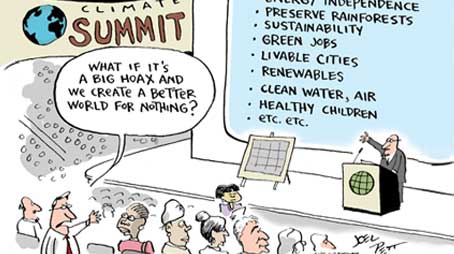
Skepticism: are you willing to change your mind?
| Joel Pett (2009) USA Today |
-- Bertrand Russell
Skepticism has received an increasingly bad name - but most of that is from mis-attribution.
20 September 2016
Research lessons from Census 2016 - making sense of a senseless fail
![]() |
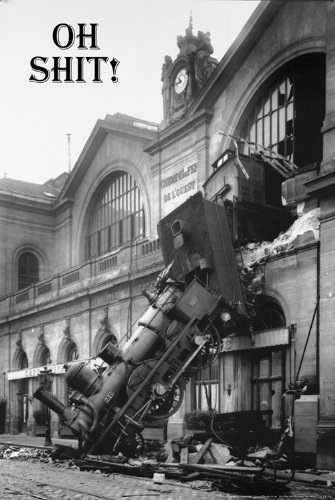
| Let's admit - it's a trainwreck |
11 April 2016
Gender equality as a fantastical fairy tale
According to the magic mirror on the wall, Snow White was the fairest by far.
- Male child carers are bound by special rules
- Tracey Spicer provides public support to airline policy ensuring men are not seated next to unaccompanied minors
- Lenore Skenazy documents multiple other examples in an article entitled “Eek, a male!”